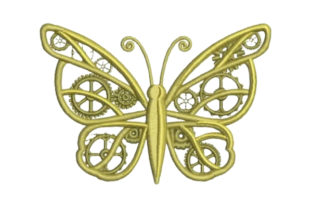
Mechanical Butterfly Review for Merch
As an embroidery designer who has spent years translating digital concepts into tangible textile art, I approach every new machine embroidery design with a critical eye. We aren’t just looking for something pretty; we are looking for something that holds up under the scrutiny of a paying customer and the wear and tear of daily life. Today, I am reviewing the Mechanical Butterfly, a design listed under the Bugs Insects category. The product description promises a gorgeous design to sew onto curtains and encourages you to let your imagination fly with this unique piece. It also notes that the embroidery file comes in multiple formats.
While the description suggests home decor, my professional instinct tells me that the true value of the Mechanical Butterfly lies in its potential for small business merch and branded assets. Is it bold enough for a cap? Delicate enough for a boutique label? Let’s break down how this design performs in real-world commercial applications.
First Impressions: Visual Personality and Brand Fit
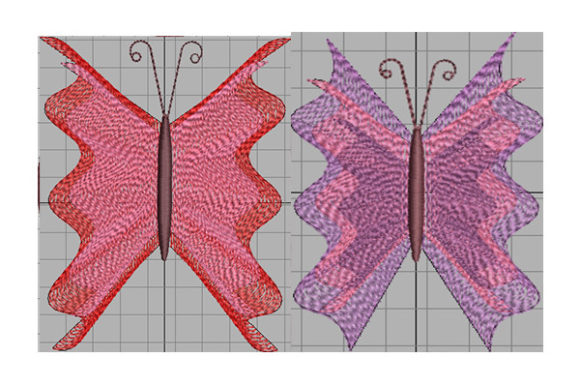
The title "Mechanical Butterfly" immediately sets a specific tone. It suggests a blend of organic elegance and industrial precision. When I first loaded the digital embroidery file into my hoop, I expected a rigid, gear-heavy aesthetic. However, based on the "gorgeous" descriptor and the insect classification, I anticipate a design that balances delicate wing structures with structured, perhaps geometric or steampunk-inspired elements.
This duality is powerful for brand identity. For a creative studio or a handmade shop, the design feels modern yet timeless. It isn’t purely playful like a cartoon bug, nor is it strictly corporate. It strikes a balance that appeals to a broad demographic. For a local café or a bakery, it adds a touch of whimsy without sacrificing professionalism. For a florist or pet brand, it can serve as a sophisticated accent mark. The visual personality is versatile, allowing it to fit into brands that value craftsmanship, creativity, and a slight edge of uniqueness.
Real-World Business Applications
Let’s move beyond the screen and discuss where the Mechanical Butterfly actually shines in a production environment. Here is how I would deploy this design across various product lines:
- Embroidered Patches: This is perhaps the strongest use case. The intricate nature of a mechanical butterfly translates beautifully to patches, which are currently trending in streetwear and utility fashion. Whether applied to denim jackets, backpacks, or tool belts, the design offers enough detail to justify the cost while remaining legible from a distance.
- Staff Uniforms and Aprons: For small businesses like artisanal bakeries or craft breweries, a chest logo is essential. The Mechanical Butterfly works exceptionally well as a subtle chest emblem. It signals attention to detail to customers. On apron embroidery projects, it serves as a focal point that elevates standard workwear into branded merchandise.
- Cap Embroidery: Curved surfaces present challenges for detailed designs. However, if the butterfly’s structure is sufficiently simplified in the digitizing process, it can sit perfectly on the front panel of a baseball cap. It offers a more distinctive alternative to standard text-only caps, helping brands stand out at trade shows or markets.
- Tote Bag Design: Canvas totes are a staple for Etsy sellers and conference attendees. A centrally placed or offset tote bag design featuring the butterfly creates a high-value perceived product. It transforms a plain canvas bag into a statement piece that customers are proud to carry, effectively turning them into walking billboards for your brand.
- Product Packaging Accents: Beyond apparel, consider applying this design to hang tags, garment labels, or even woven labels inside clothing. This level of finishing touches significantly boosts the perceived quality of the handmade product.
Strategic Considerations and Limitations
No design is perfect for every application. As a designer, I must advise caution in specific scenarios to ensure the integrity of the final product. The Mechanical Butterfly may struggle in the following contexts:
- Small Patch Sizes: If you attempt to scale this design down too far, fine details may merge. Test the design at the actual size you intend to produce. If the wings become indistinguishable blobs, the design loses its impact.
- High Stitch Density Areas: Mechanical themes often involve dense fills. Ensure your fabric can support this weight. On lightweight fabrics, dense stitching can cause puckering, ruining the look of the finished product.
- Curved Surfaces and Tiny Lettering: While the butterfly itself might be robust, any accompanying text must be carefully evaluated. Small lettering on curved caps or tiny uniform logos can become illegible after washing.
- Dark Uniforms and Contrast: Evaluate the thread colors against your target fabric. A light-colored butterfly on dark denim requires careful underlay selection to prevent the design from sinking into the fabric texture.
Impact on Brand Identity and Customer Trust
In the world of commercial embroidery, consistency is key. Using a unique asset like the Mechanical Butterfly helps establish a distinct visual language. When customers see this specific motif on a tote bag, then later on a hat, and finally on a product tag, it reinforces brand identity. It creates a cohesive narrative that says, "We care about the details."
Furthermore, high-quality embroidery builds trust. A poorly executed stitch job can signal cheapness. By investing in a well-digitized design and testing it thoroughly, you demonstrate professionalism. Customers associate the durability and tactile quality of good embroidery with the reliability of the business itself. This design, with its implied complexity, suggests that your brand is not cutting corners.
Practical Designer Notes for Production
Before you commit to mass production, follow these essential steps to mitigate risk:
- Test in Black and White: Convert the design to monochrome to check contrast and spacing. This reveals if the design relies too heavily on color to make sense.
- Check Hoop Size and File Formats: Confirm the maximum hoop size required by the embroidery file. Ensure you have the correct formats (e.g., .pes, .dst, .exp) for your specific machine.
- Stabilizer Selection: The choice of stabilizer is crucial for mechanical designs, which often have directional stitches. Use a cut-away stabilizer for stretchy fabrics to prevent distortion over time.
- Create a Printable Mockup: Before sewing, generate a printable mockup to show clients or stakeholders. This allows for approval on placement and scale without wasting thread and fabric.
- Verify Commercial Licensing: This is non-negotiable. Ensure you have the right to sell products made with this design asset. Check the license terms explicitly before listing items on Etsy or your own website.
- Inspect Spacing and Thread Colors: Look closely at the transition between different sections of the butterfly. Are there gaps that will show the base fabric? Do the thread colors complement each other visually?
The Mechanical Butterfly is more than just a bug; it is a versatile tool for branding. By understanding its strengths and limitations, you can leverage it to create memorable custom apparel and engaging design assets that resonate with your audience. Always test on real fabric, compare it beside other design assets in your portfolio, and confirm that the final output meets your standards for quality and durability.